


Breathing Filter
What Is Breathing Filter
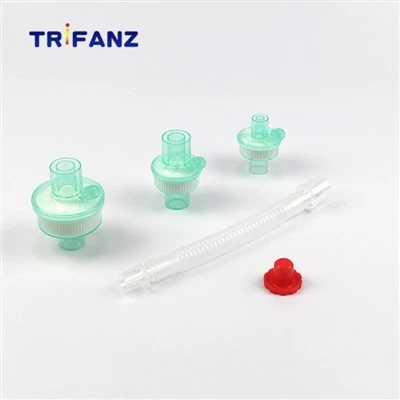
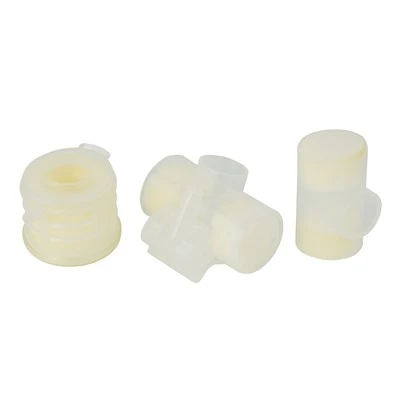
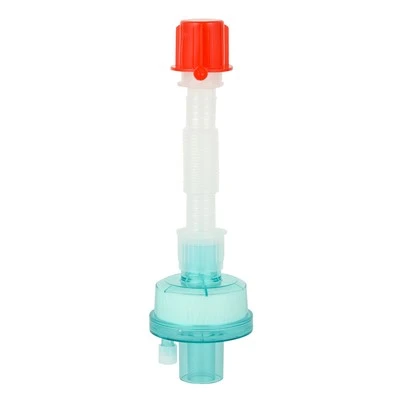
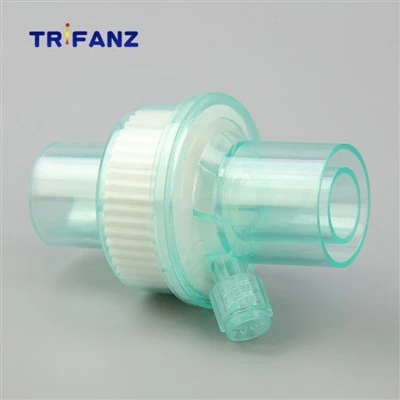
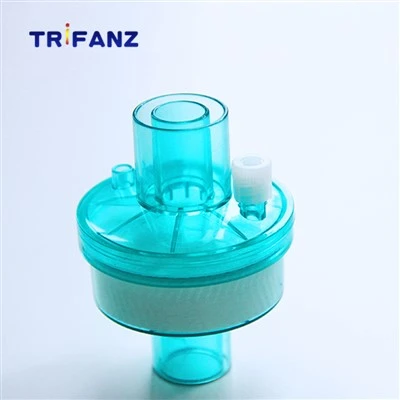
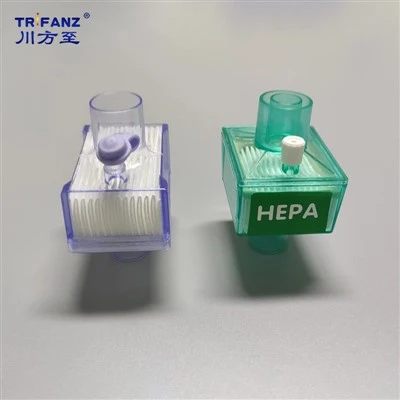
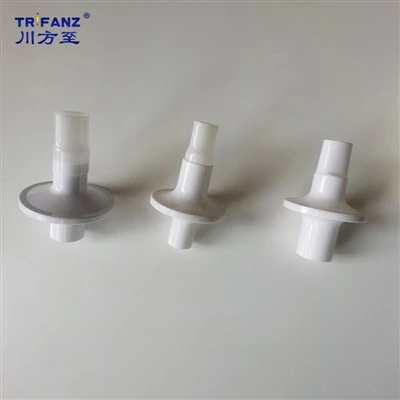
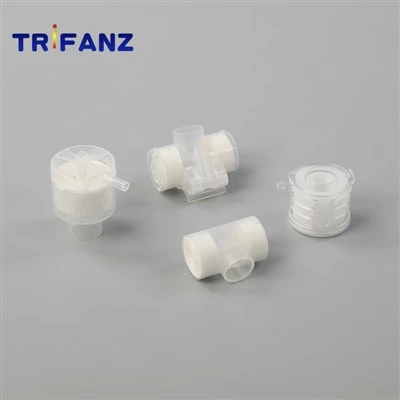
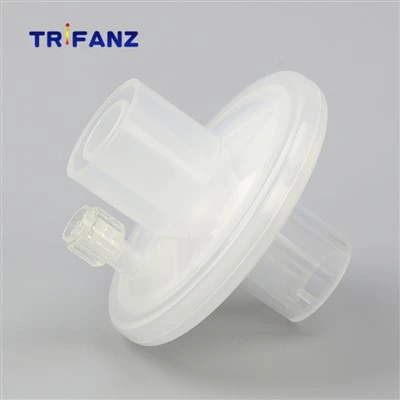
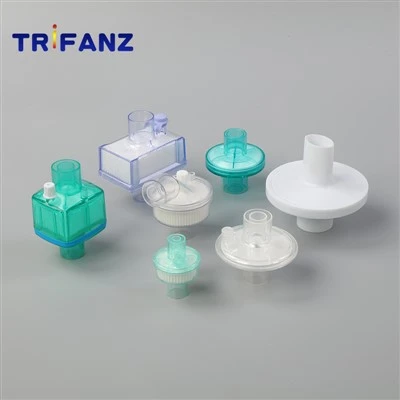
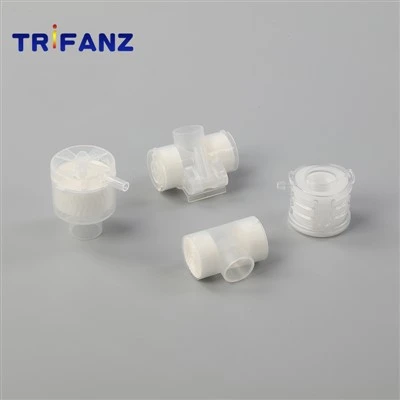
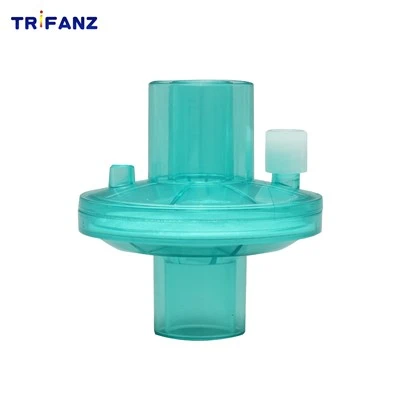
Trifanz Breathing Filter, manufactured directly by the source factory. Our full product line includes standard models, BVF and HME models (straight/angled), HMEF(straight/angled), tracheostomy models (Types I/II/III), and PFT pulmonary function models (F1-F4, including MP-type mouthpiece versions). These filters effectively trap bacteria and particles, while the temperature- and humidity-controlled models maintain airway humidity, and the composite models combine filtration and humidification in one. Ethylene oxide sterilized and individually packaged. Certified by NMPA, CE MDR, and other international regulatory bodies. Click to inquire and get your exclusive wholesale quote!
Advantages of Breathing Filter
Comprehensive Product Range: With five major categories—ranging from standard models to PFT (pulmonary function test) models, and from straight-tip to angled-tip designs—this single brand covers all clinical respiratory filtration scenarios.
Robust Certification: Certified by the NMPA, CE MDR, and other international regulatory bodies, our products are listed on official platforms and are globally compliant.
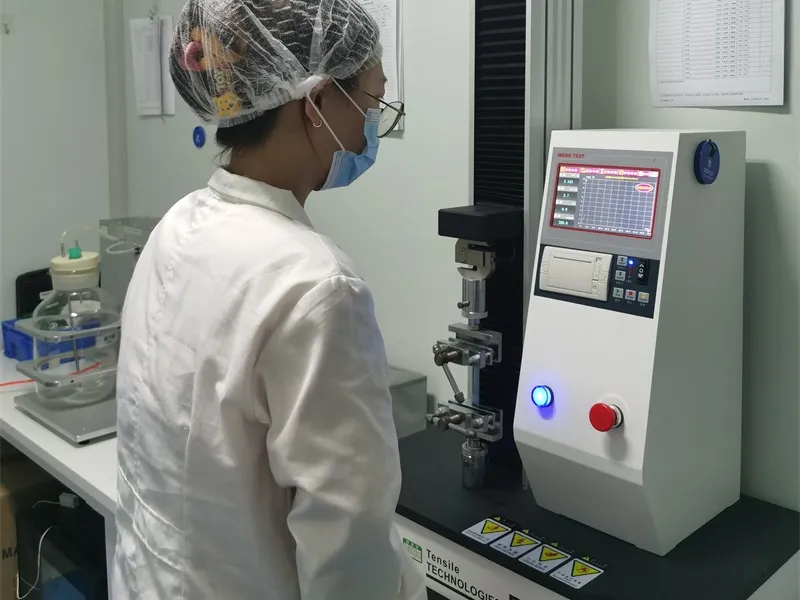
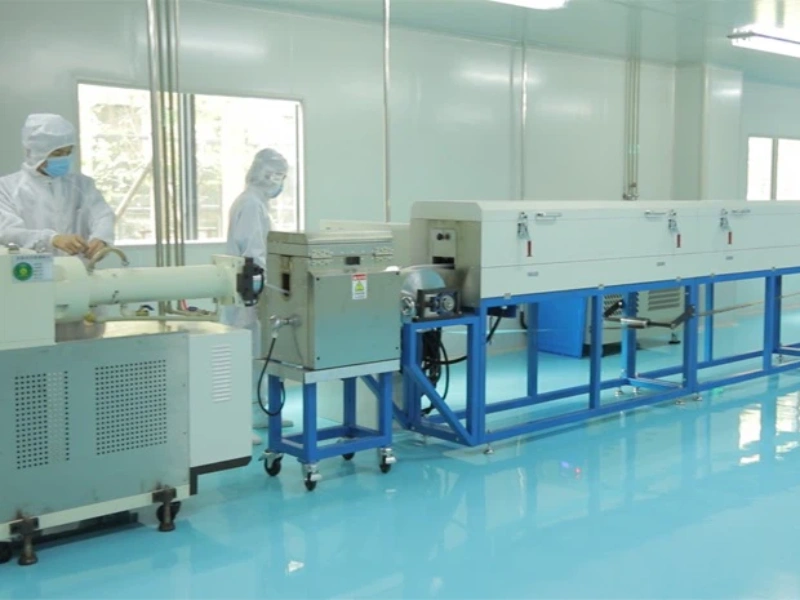
Consistent Quality: With our own Class 100,000 GMP facility and a technical team with nearly 20 years of experience, we ensure consistent quality across every batch.
Direct-from-Source Supply: Shipped directly from the factory, we support OEM/ODM customization, offering control over both lead times and costs.
Our factory
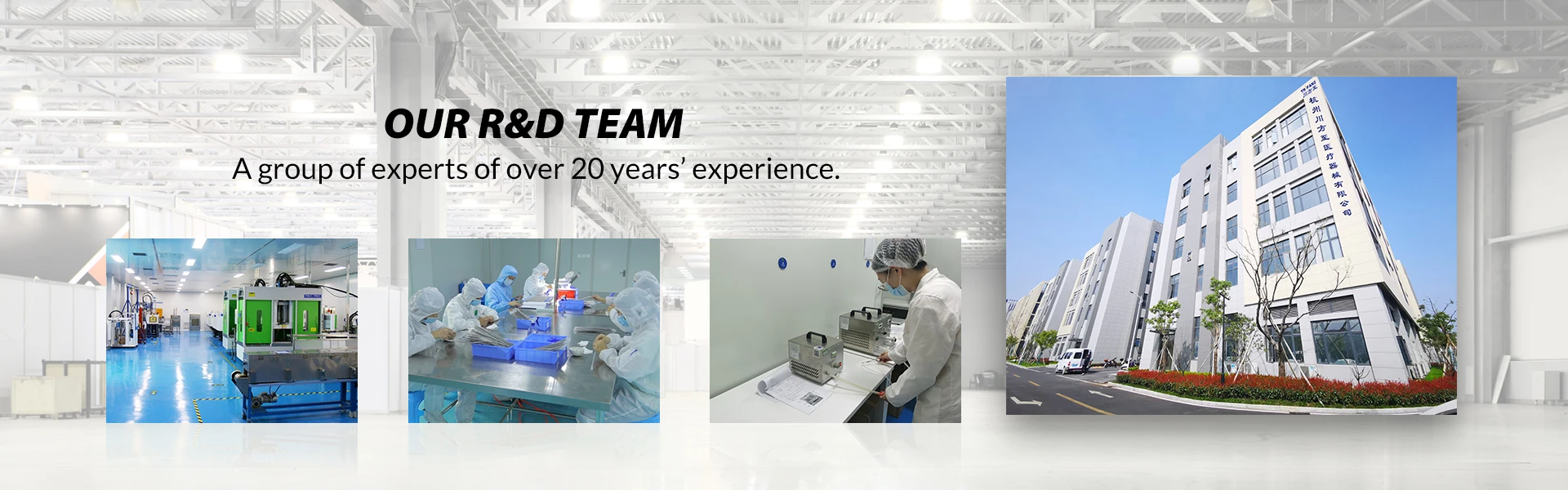
HangZhou Trifanz Medical Device Co., Ltd is located in the vibrant bio-industrial park of LinPing, Hangzhou. The park enjoys a beautiful environment and convenient transportation. We have own the production site: 1000 square 100,000 GMP clean workshops.
Our certificate
Passed the CE, ISO13485 system certification; can provide OEM / ODM services.
Experienced team
It has its own R&D team. A group of professional and technical personnel with nearly 20 years of experience in the industry.
Our products
Endotracheal tube, laryngeal mask airway, closed suction catheter,anesthesia breathing circuit and so on.
Breathing filters provide protection against vapours, chemical substances and toxic gases. They usually consist of a bed of activated carbon. They are described according to 2 criteria: filter type and class. A specific filter for a given gas or family of gases or vapours is indicated through marking consisting of a letter and a strip of a certain colour. If the filter is designed to protect against several families of gas simultaneously, we call it a combined filter: it is designated by the juxtaposition of a letter and the corresponding colour strips.
AB = Filters organic gases/vapours and inorganic gases/vapours. BK = Filters inorganic vapours, ammonia and ammonia derivatives. How to select the right class of efficiency for your breathing filter. As for aerosol filters, there are three classes of protective filters based on their capacity (in other words, the best balance between volume and effectiveness of the absorbent material). Class 1: For gas concentrations of less than 0.1% by volume, the lowest capacity (filters for half masks). Class 2: For gas concentrations of between 0.1% and 0.5% by volume, medium capacity (cartridge). Class 3: For gas concentrations of between 0.5% and 1% by volume, the largest capacity (large-capacity canister worn at waist-level). At an equivalent ambient concentration level, a class 3 filter will operate for longer than either a class 2 or a class 1 filter. Some manufacturers offer specific filters that provide protection against carbon monoxide (CO). They are to be used exclusively with life-saving and evacuation devices.
How Long Is a Breathing Filter Effective For?
A breathing filter no longer functions properly when the carbon granules become saturated. It starts to let through all the pollutants with which it is in contact. For this reason, a breathing filter needs to be replaced on a regular basis, before the filter becomes totally saturated. Particle filters are identified by their characteristics, which are printed directly on the mask. FF stands for Filtering Facepiece, while P1, P2 and P3 refer to the class of filter efficiency. On filtering cartridges, this information is shown on a white strip marked either P1, P2 or P3. The different particle filter classes: Filters at least 80% of airborne particles (means that fewer than 20% of particles pass through the filter). Offers protection against solid particles that are not specifically toxic. Filters at least 94% of airborne particles (means that fewer than 6% of particles pass through the filter). Offers protection against hazardous and irritant airborne particles in solid and/or liquid form (silica, sodium carbonate, etc.)
Filters at least 99.95% of airborne particles (means that fewer than 0.05% of particles pass through the filter). Offers protection against toxic airborne particles in solid and/or liquid form. The service life of particle filters depends on the environment. The filters become clogged over time and let less and less air through. When it becomes difficult to breathe, you will know the filter is getting to the end of its service life and needs to be replaced.
Combined filters are designed to offer protection against airborne particulate, gases and vapours simultaneously. They are made up of a particle filter combined with a breathing filter. They are characterised by dual marking: the coloured strip for breathing filters plus the white strip for particle filters. A filter with the colour code shown opposite is suitable for the following contaminants. Gas and vapours of organic compounds with a boiling point ≥ 65°C, up to the concentrations covered by a class 2 filter (5,000ppm). Inorganic gases and vapours up to the concentrations covered by a class 2 filter (5,000ppm). Particles up to the concentrations covered by a class 3 filter.
Air purifying, half mask breathing filters have a rubber face seal which fits over the nose and under the chin. It is fitted with cartridges which purify the air as the wearer breathes. Different types of cartridges are available for different types of air contaminants. Relatively lightweight and offer good protection from many air contaminants. Air purifying breathing filters can be used for protection from a wide variety of breathing filtery hazards. Cartridges and breathing filters are designed to provide protection against a specific type of hazard.
Cartridge for low level concentrations of certain toxic dusts including asbestos, radionuclides and silica. Organic vapor cartridge are approved for concentrations not to exceed 1000 ppm for many organic solvents, petroleum distillates, and alcohols. Acid gas/mist cartridge for atmospheres containing low levels of mineral acid gas or mist. Pesticide for low levels of pesticide vapors or mists. Combination cartridge for environments with more than one contaminant present. Mercury cartridge for protection against low levels of metallic mercury vapors. The facepiece extends around the entire face, covering the eyes, nose, chin and mouth. Full facepiece breathing filters provide a better seal and therefore, more protection than half-mask air-purifying breathing filters. They also protect the eyes and face from irritating vapors, mists, and splashed chemicals.
Full face breathing filters are used where a greater degree of breathing filtery protection is needed or where eye and face protection is desirable. This class of breathing filters feature a battery powered, portable fan which draws air through a particulate or chemical breathing filter and blows it to the facepiece. The fan and breathing filter unit may be an integral part or the facepiece or mounted on the wearer's back or belt. Full and half-mask facepieces are available as well as a variety of helmets and hoods. Major advantages are derived from the positive pressure provided by the fan forcing air into the facepiece, hood or helmet. This eliminates difficulty in breathing provided by negative pressure breathing filters and reduces the importance of a good facial fit. These breathing filters provide clean, fresh air to the wearer from a stationary source such as a compressor or compressed air cylinders. They may be equipped with a half or full facepiece, helmet, or hood.

Breathing Filters Have Certain Standard Safety and Hygiene Levels
Breathing filters provide an effective barrier that prevent cross contamination between patients, breathing systems, respiratory and anaesthetic equipment, and the clinical environment. Their use is widely recognised as beneficial and is recommended by a number of Anaesthetic Associations. They are widely used across the hospital particularly in the operating theatre, critical care, lung function units, and respiratory care units. We offer a wide and comprehensive choice of breathing filters with a variety of filtration efficiencies, sizes, volumes and shapes to ensure maximum customer choice. We provide both electrostatic and pleated mechanical filters, with a range of patient connections, providing a choice of products to meet the majority of clinical situations.
Independently validated bacterial and viral filtration efficiency. Proven filtration effectiveness against coronaviruses, mycobacterium tuberculosis and Hepatitis C. Proven efficiency within the intended clinical environment. Low compressible volume reducing rebreathing of expired carbon dioxide. Low resistance to flow over its intended period of use to reduce the work of breathing. Option of patient connections conveniently packed and ready for use reducing environmental impact of the packaging. Lightweight reducing potential patient trauma. All of our filters are tested at independent microbiology laboratory facilities against clinically relevant bacterial and viral challenges. We offer two types of breathing filters: electrostatic and pleated membrane.Despite differences in the method of filtration, electrostatic and pleated membrane filters can both offer high efficiency and a high level of protection to patients.
Full Face Mask and Breathing Filter Combination Guide
If you're working in an environment where airborne particles are a hazard, then you're in need of more than just eye protection. Full face masks are the ideal solution, as they will protect your eyes from any harmful particles, while also accommodating particle breathing filters that can spare your lungs the same fate. When choosing a full face mask to protect both your eyes and your lungs, your decision is twofold, as you'll need to know what your face shield stands up to, as well as your particle breathing filter.
If you're looking for a full face mask and respiratory breathing filter to protect your eyes, face and lungs, you'll need to make sure at least two of these three standards are specified. Simply put, EN 136 governs the quality of your full face mask, EN 14387 is concerned with the minimum requirements for gas breathing filters and combined breathing filters (gas and particles), while EN 143 is the standard for particle breathing filters.
This standard sets the minimum requirements for face masks that are used as part of a respiratory device, or any full face mask that includes a respiratory breathing filter. A full face mask is defined as a protective mask that covers the eyes, nose, mouth and chin, and they are commonly made from natural rubber, silicone rubber, or EPDM with clear plastic visors. EN 136 certified masks are divided into three classes, with a Class 3 rating representing the highest level of protection. Full face masks rated class 1 are suitable for light duty work and are low maintenance. These masks provide enough protection for low danger environments, and are often disposable or designed for infrequent use. Class 2 full face masks are suitable for general duty work, and include maintainable parts. These masks will provide a higher level of protection, and are designed to be able to clean, repair or replace parts, making them suitable for frequent or everyday use over longer periods. This is the highest level of specification under EN 136.
Class 3 masks are designed for heavy duty use and fire fighters, and carry the most protection, durability and maintenance ability of all face masks. The classification system of EN 136 makes it easy to identify the general quality and protection level of your face mask at a glance. The amount of space the mask allows you to see in your peripheral vision. The amount of dust, gas or particulate the mask will allow through. The degree to which a mask retains its protective qualities at extreme temperatures. The degree to which the mask protects you from CO.
Heat and moisture exchangers and breathing breathing filter are intended to replace the normal warming, humidifying and breathing filtering functions of the upper airways when these structures are bypassed during anaesthesia and intensive care. Guidance on their use continues to evolve. The aim of this part of the review is to describe the principles of their action and efficiency and to summarise the findings from clinical and laboratory studies. Based on previous studies, an appropriate minimum target for moisture output is 30 and 20g.m−3 for long-duration use in intensive care and short-duration use in anaesthesia, respectively. The practice of reusing a breathing system in anaesthesia, provided it is protected by a breathing filter, assumes that the breathing filter is effective. However, there is wide variation in the gas-borne filtration performance, and contaminated condensate can potentially pass through some breathing filters under typical pressures encountered during mechanical ventilation.
When a patient’ s trachea is intubated or a supraglottic airway device is placed in situ, the normal warming, humidifying and breathing filtering functions of the upper airways are bypassed. Hence, gas delivered to the patient needs to be artificially conditioned to replace these lost functions. Heat and moisture exchangers (HMEs) are intended to conserve a portion of the patient’ s exhaled heat and moisture, and condition inspired gas by warming and humidifying it. breathing breathing filter are intended to reduce the transmission of microbes and other particulate matter in breathing systems. Devices that contain both a breathing filter and an HME are termed heat- and moisture-exchanging breathing filters (HMEFs). The terms ‘electrostatic’ and ‘pleated’ used to distinguish the two common types of breathing filter are not ideal, as both types rely to some extent on electrostatic charge to hold particles within the breathing filter material and both types of material could be pleated. The main difference between the two types is the density of the fibres. For ‘electrostatic’ breathing filter material, the density of fibres is comparatively low and the electrostatic charge on the fibres is high. For ‘pleated’ breathing filters, the density of the fibres is high: this causes an increase in the resistance to gas flow; pleating the material increases the surface area and thus reduces resistance. This type of breathing filter is also termed ‘hydrophobic’ (as the surface of the breathing filter material repels water) or ‘mechanical’. For this review, the terms ‘electrostatic’ and ‘pleated’ will be used to distinguish the two types of breathing filter.
HangZhou Trifanz Medical Device Co., Ltd is located in the vibrant bio-industrial park of LinPing, Hangzhou. The park enjoys a beautiful environment and convenient transportation. It is adjacent to Shanghai, Ningbo and other important ports. The company is an integrated science and technology innovation enterprise, mainly engaged in the research, development, production and sales of medical catheters in the fields of respiration, anesthesia, and severe diseases. It has its own R&D team: a group of professional and technical personnel with nearly 20 years of experience in the industry; own The production site: 1000 square 100,000 GMP clean workshops; among the company's employees, more than 80% of college and university staff account for the company's production and operation activities in strict accordance with national and international requirements to run the quality management system cloud operation, passed the CE, ISO13485 system certification; can provide OEM / ODM services.


Certificate


video
FAQ
We're professional breathing filter manufacturers and suppliers in China, specialized in providing high quality custom service. We warmly welcome you to wholesale cheap breathing filter from our factory.